




See all
Comienzo
1ª Junta
Multas
Curiosidades
Presente
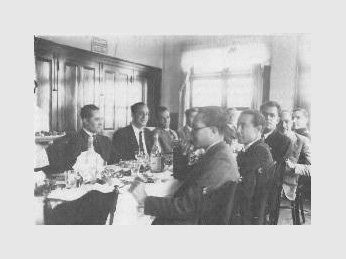
«The Illustrious Official College of Pharmacists of the province of Las Palmas is a Public Law Corporation, recognized and protected by Article 36 of the Constitution, with its own legal personality and statutory autonomy, within the bounds of the law.
Its structure and internal functioning are democratic, and are regulated by the bylaws and in accordance with current legislation.
To belong to the Illustrious Official College of Pharmacists, it is an indispensable requirement to possess a degree in Pharmacy.
Membership in the College is mandatory to practice any professional activity in the province of Las Palmas that is covered by the degree in Pharmacy, except in cases and with the requirements provided for by law. For those who, despite holding such a degree, do not practice the profession, membership is voluntary, and they may voluntarily join the College as Associate Pharmacists, without the status of registered members. (Excerpt from Articles 1 and 2 of the Statutes BOC, 109 of May 24, 2011).»

The presidency fell to Bartolomé Apolinario, Juan Mañas became secretary, Gaspar Meléndez was appointed treasurer, and Federico León accountant, while Juan Puig, Agustín Olózaga, and Manuel Blanco were designated members. However, as soon as these results were read, the accountant stood up and blurted out that he would “in no way” accept the position, and the secretary also refused because “personal matters” prevented him from doing so.
Up to four members resigned at that time, creating a situation that was difficult to salvage, so “having doubts as to whether the Board was constituted or not due to these resignations” The session was adjourned, and the delegate of the King's Government was notified so that he could resolve the matter. Fortunately, he declared the College constituted and, in accordance with current legislation, the excuses of those who claimed impossibility to exercise their office were dismissed.
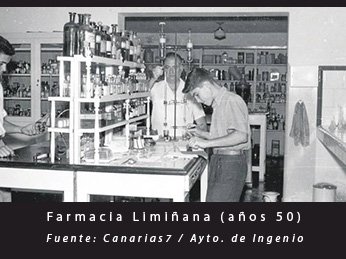
Among the regulations of this bylaws, it stood out that; unexcused absences from the General Meeting were punishable by fines ranging from five to twenty-five pesetas, which had to be paid even by the president.
Nevertheless, the heated debates that arose on this topic and the regulation of night, holiday, and Sunday shifts, as well as opening and closing hours, were quickly resolved with the creation of the Statute, which later served as a model for the development of those of other colleges.
The Deputy Delegate of Pharmacy of the Ministry of Health controlled pharmacies, herbalists, drugstores, spice shops, medicines, and poisons, but their duties were gradually taken over by the College until their role disappeared in 1933.
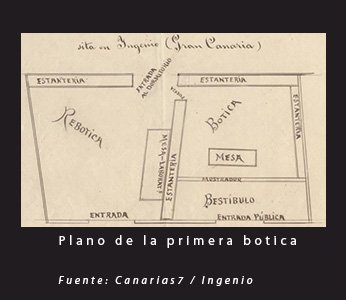
One year after its establishment, the first female pharmacist in Las Palmas, María del Pino Suárez López, was registered. She requested permission to dispense medications in Telde. After 5 years, the number of registered members was 37, the fee was 15 pesetas, and it took 8 years to acquire the first copying machine.
The first president held office for five months and returned after five other presidents, until in 1936 he was succeeded by Vicente López Socas, who led the collective for a quarter of a century.

The College currently has 1200 registered members., The photocopier gave way to the then unimaginable Electronic Prescription, and the 19,300 pesetas budget from 1935 has been converted with great effort into 1.5 million euros and the secret ballot into a raised hand vote.
Circumstances, the economy, mindsets, and society as a whole have radically changed, but the spirit of defending common interests remains intact.